

The short answer
Yes. Cider is a fast fashion brand. It just uses nicer words for it. The brand puts out hundreds of new styles every week. Most items cost under $40. The clothes are made overseas in factories the company does not even own. And Cider shares almost no real information about wages or environmental impact. That is the fast fashion formula. It just has a TikTok-friendly look on top.
But yes is not the whole story. If you already own a pile of Cider clothes the better question is why the brand gets away with the smart fashion label. And what that label actually means for you as a shopper. Here is what we found.
Where Cider came from and why its pitch sounds different from Shein
Cider started in late 2020. A small group of founders with backgrounds in tech and fashion built it. The company has offices in Los Angeles. Most of its factories are in China. Some production also happens in Bangladesh. That LA office matters for the branding. Cider does not feel like a Chinese import site the way Shein does to many shoppers. But the factory setup behind it is very similar.
Cider calls its model smart fashion. The idea is that the brand uses real sales data to make small batches of each item instead of mass producing everything up front. In theory this cuts down on unsold stock that ends up in landfills. This is a real difference from a brand like Zara. Zara forecasts trends months ahead and orders in bulk. The problem for Cider is scale. Even if each style is made in a small batch the brand still drops hundreds of new items every single week across dozens of mood categories. Y2K. Coastal cowgirl. Coquette. Whatever is trending that Tuesday. Making small batches of everything does not solve the core problem if you are still making everything.
What actually makes something fast fashion
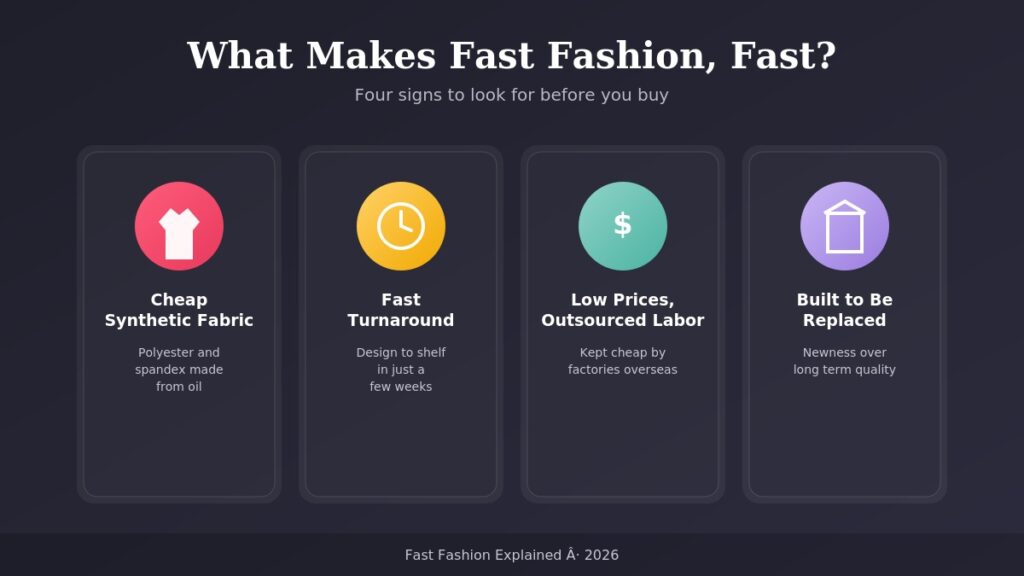
Fast fashion is not an insult. It is just a way to describe a business model. Cheap synthetic fabric. Fast turnaround from design to shelf. Low prices kept low by outsourced labor. And a strategy built on newness instead of long term quality. These brands are made to be replaced not repaired.
Cider checks every box here.
- Materials. Most of the catalog is virgin polyester and spandex. Both come from oil and neither breaks down naturally. There is a Recycled Cider line but it is a small part of the total stock. And most of those pieces are only part recycled polyester mixed with new fiber. Not fully recycled fabric like some other brands use.
- Speed. New drops land almost every week. Compare that to a brand like Everlane or Reformation. They release maybe four to six main collections a year.
- Price. T-shirts run about $15 to $25. Dresses land around $30 to $50. Prices that low only work with cheap labor and cheap fabric. There is no version of fair wages and organic cotton that makes a $22 dress possible.
- Transparency. Cider shares a handful of factory names and a zero tolerance policy document. But there is no public wage data. No public audits. And no view into the rest of the supply chain past that first layer.
The rating group Good On You gives Cider its lowest score on both environment and labor. Most people who dig into the brand’s public info land on the same point. There is some surface effort. But not much underneath it.
The one real difference between Cider and Shein
If you are choosing between the two here is the real trade off. It is not really about ethics since both score poorly there. It is about returns.
Cider’s return window is currently 30 days as of early 2026 though this has changed before and could change again. In general it is easier to actually use than Shein’s return process. Shein often ships from warehouses overseas so sending an item back can eat up a chunk of your refund. If you are a US shopper who plans to order a few sizes and send some back check Cider’s current return policy before you buy. This detail affects your real cost more than any sustainability score will.
Who should skip Cider
If you care about cost per wear Cider is a bad deal even before ethics come into the picture. People who have tested the clothing report the same pattern you would expect from sub-$25 synthetic pieces. Seams loosen after a few washes. Fabric pills fast. Dye can bleed. If you want something you will still own in two years this is not that brand.
Skip it if:
- You want a small wardrobe of pieces that actually last.
- Your size falls outside Cider’s more common size range. Fit complaints are common so expect at least one return on a first order.
- You care about lower environmental impact not just a lower price tag. Some brands cost more but publish real audited data on wages and emissions.
Cider might work if:
- You need one trend piece for a single event and know you will only wear it once or twice.
- You are fine treating the purchase as disposable and are ready to return it if the fit is off.
- Price really is your main limit and you have made peace with the trade offs.
What smart fashion gets right and where it stops
Give the model some credit. Making small batches based on real demand is a real improvement over blind bulk manufacturing. It probably does stop some unsold stock from ending up burned or dumped in a landfill. That is a real problem across the whole industry. So this part is not nothing.
But small batches of a huge constantly changing catalog is still a huge amount of production. The math on waste does not improve much if you avoid overproducing single items while still releasing thousands of items a year. It is a bit like saying you cut food waste by cooking smaller portions of two hundred different dishes a week. The total amount is still the same.
If you want to shop differently
You do not need to jump straight to $200 organic cotton basics to shop better than Cider. A few middle ground options that are actually realistic:
- Resale apps like ThredUp, Depop or Poshmark get you similar trend pieces at similar prices without paying for new production.
- Rental services work well for one time event outfits. Which is honestly what a lot of people buy from Cider for anyway.
- Brands with real published data like Everlane, Pact or Afends cost more per item. But the cost per wear often evens out if you actually wear the item a lot.
None of this means becoming a different person overnight. It just means shifting where your next purchase goes.
The bottom line for 2026
Cider is fast fashion. The smart fashion label is a real difference in how it produces. But not in how much it produces. And volume is what drives the environmental and labor impact. Not the batch size per style. If you shop there go in knowing the trade off. And be honest with yourself about how many times you will actually wear the item.
Prices, return policies and collection details are current as of mid-2026 and can change. Check Cider’s site directly before you order.
FAQ
Is Cider a Chinese company? Cider started in 2020 with offices in Los Angeles. But most of its manufacturing happens in factories in China with some in Bangladesh. It is a US-facing brand with an overseas supply chain like most fast fashion brands.
Is Cider’s clothing good quality? Mostly no. Most items use thin synthetic fabric like polyester and spandex. Common complaints include loose seams and pilling fabric after just a few washes. It is made for short term wear not long term use.
Is Cider more ethical than Shein? Not really. Both run on a similar fast fashion model with little supply chain transparency and no published living wage data. Cider’s return process is often easier to use than Shein’s but that is a shipping difference not an ethics one.
Does Cider use recycled materials? It has a Recycled Cider line but it is a small part of the total catalog. Most of those pieces mix recycled and new polyester rather than using fully recycled fabric.