
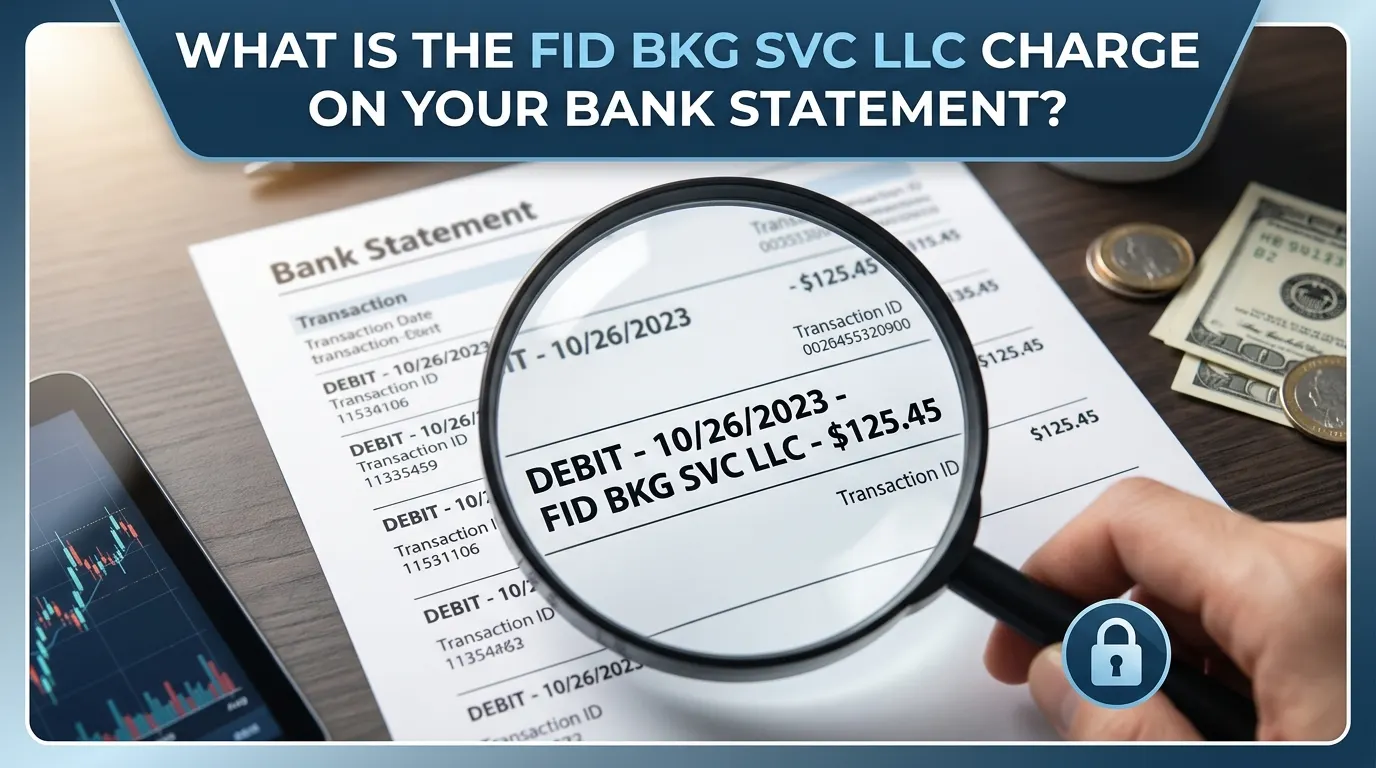

Recently, did you notice a line item on your check that shows FID BKG SVC LLC? If you do, you might be asking yourself what it means and if it’s something you should be worried about.
The name of the merchant may not be easily understood and can be confusing when seeing a transaction that is not familiar. An FID BKG SVC LLC charge on bank statements, in many instances, is not a fraud charge and is associated with financial services or investment accounts. It’s always best to double-check any transaction that you do not recognize, though.
Continue reading to learn what FID BKG SVC LLC is, why the charge might show up on your account, and what you can do if you think it is an unauthorized charge.
What Does FID BKG SVC LLC Mean?
The typical meaning of FID BKG SVC LLC is Fidelity Brokerage Services LLC, which is a brokerage and investment services company. Fidelity is a major financial services company in the United States, providing the following products:
• Investment accounts
• Retirement accounts
• Stock trading services
• Mutual funds
• Financial planning services
• Cash management accounts
If you’re seeing the FID BKG SVC LLC on your statement, it typically means that funds have been sent, received, deposited, invested, or withdrawn in a Fidelity account.
Why Does a FID BKG SVC LLC Charge on Bank Statement Appear?
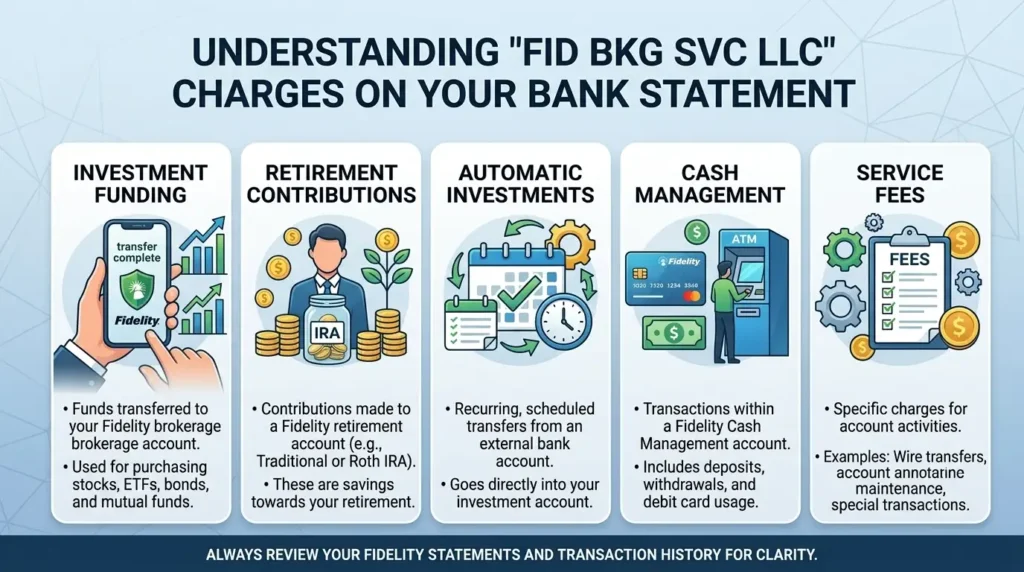
An FID BKG SVC LLC charge on bank statement can occur for several reasons.
Investment Account Funding
A common one is that you transferred funds from your bank account to a Fidelity brokerage account. Many investors make regular investments in investment accounts to buy stocks, ETFs, bonds, or mutual funds. These transactions might show as FID BKG SVC LLC on your transaction report. Financial institutions often use abbreviated transaction labels, making what does GPC EFT mean on bank statement a useful reference for decoding account activity.
Retirement Account Contributions
The contribution can be made through Fidelity Brokerage Services LLC if you participate in a retirement account like an IRA. In this scenario, the charge will be just the amount of your retirement savings contribution.
Automatic Investment Plans
Some Fidelity clients have recurring transfers, which are automatic transfers from a bank account that go into an investment account monthly. These scheduled transfers might be an FID BKG SVC LLC charge on bank statement and require the account holder’s approval.
Cash Management Transactions
Fidelity can provide cash management accounts, which are like checking or savings accounts. The FID BKG SVC LLC description may appear on the deposits, withdrawals, and transfers of these accounts. Certain transfers move through automated banking networks, which is why learning about a NWEDI charge on bank statement can provide additional context for similar transactions.
Brokerage Fees or Service Charges
Many of the Fidelity services are fee-free, but there may be charges for particular account activities. These can include:
• Wire transfer fees
• Account service fees
• Investment-related charges
• Special transaction fees
These fees could be listed on your bank statement as FID BKG SVC LLC.
Is an FID BKG SVC LLC Charge Legitimate?
In most cases, yes.
An FID BKG SVC LLC charge on bank statement is typically associated with a legitimate Fidelity account activity. If you own a brokerage account, retirement account, or cash management account with Fidelity, it is probably associated with one of your financial transactions.
If you are not sure if it is fraud, ask yourself the following questions:
• You recently invested.
• You scheduled an automatic transfer.
• A family member used a linked Fidelity account.
• You contributed to a retirement account.
• You transferred money between financial accounts.
Often, people neglect recurring transfers that were established months or years before the time.
How to Verify a FID BKG SVC LLC Charge on Bank Statement
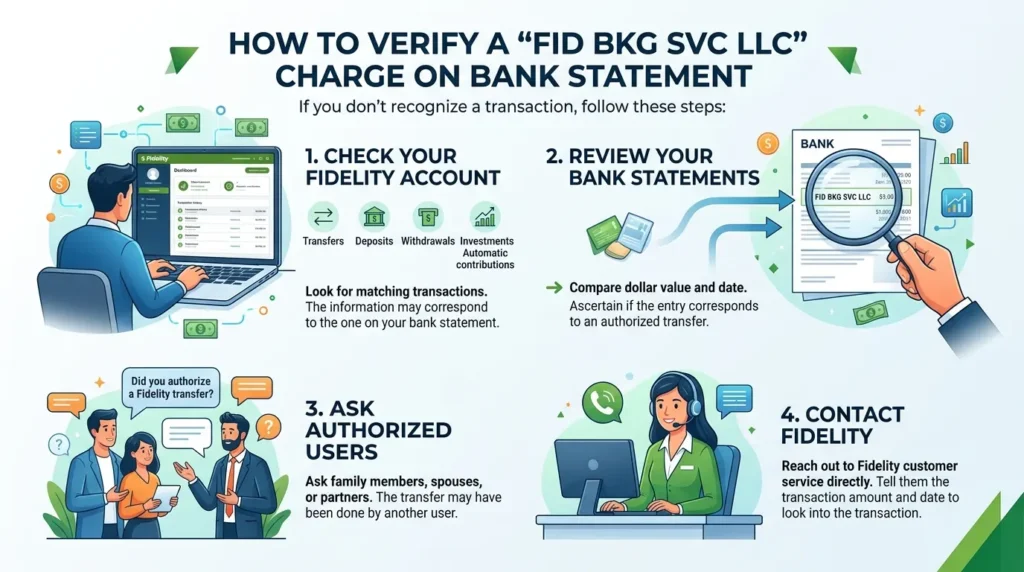
If it is a transaction that you don’t recognize, follow the following steps:
Check Your Fidelity Account
Go to your Fidelity account and check on recent transactions. Look for:
• Transfers
• Deposits
• Withdrawals
• Investments
• Automatic contributions
The information in the transaction may correspond to the one that shows on your bank statement.
Review Your Bank Statements
Check your current banking transactions and compare the dollar value and the date of the transaction. This will help ascertain if the FID BKG SVC LLC entry corresponds to an authorized transfer.
Ask Authorized Users
Ask family members, spouses, or business partners if they started the financial relationship. Sometimes, the transfer may have been done by another authorized user.
Contact Fidelity
If you still don’t know what the charge is, reach out to Fidelity customer service directly. Tell them the transaction amount and the date for them to look into the transaction that took place in your account.
What If You Don’t Have a Fidelity Account?
If you don’t have a Fidelity account, you should look into the charge if you see the name FID BKG SVC LLC on your statement.
Possible explanations include:
• A mistaken transaction
• An unrecognized linked account.
• Identity theft
• Unauthorized account activity
• Banking errors
Never disregard charges that are not familiar to you, particularly when they show up again and again.
What to Do If the Charge Is Unauthorized
If you see that the FID BKG SVC LLC charge has been made on your bank statement, act promptly if you think it is not genuine.
Contact Your Bank
Inform your bank/credit union as soon as possible. They can:
• Block future transactions
• Reverse unauthorized charges
• Issue a new card.
• Open a fraud investigation
Contact Fidelity
Contact Fidelity and let them know that you are not familiar with the transaction. They can check their own records and see if there is one in your name.
Monitor Your Accounts
Thoroughly check all financial accounts for unusual activity. Look for:
• Unknown transactions
• New accounts
• Unauthorized withdrawals
• Changes to personal information
Update Security Measures
Protect yourself by:
• Changing passwords
• Enabling two-factor authentication
• Monitoring credit reports
• Setting up account alerts
The following steps can help to prevent future fraud.
How to Prevent Confusion About Bank Statement Charges?
Bank statement descriptions often include abbreviations that may be unclear.
To minimize confusion:
- Keep records of investments and transfers.
- Review monthly statements regularly.
- Set up transaction alerts.
- Track recurring payments.
- Save confirmation emails for financial transactions.
Proactive monitoring helps you recognize legitimate charges and quickly identify suspicious activity.
Final Thoughts
An FID BKG SVC LLC charge on bank statement typically relates to Fidelity Brokerage Services LLC and often indicates a transfer, investment, retirement contribution, or similar transaction. In most cases, this charge is legitimate and linked to your Fidelity account.
If you do not recognize the transaction, investigate promptly. Review your financial records, check recent account activity, and contact your bank and Fidelity if needed.
Understanding FID BKG SVC LLC charges helps you manage your finances confidently and ensures all account charges are accurate and authorized.
FAQs
1. Does FID BKG SVC LLC always refer to Fidelity?
In most cases, yes. FID BKG SVC LLC typically stands for Fidelity Brokerage Services LLC and is associated with investment, retirement, or cash management account activity.
2. Can automatic investments create a FID BKG SVC LLC charge?
Yes. Many Fidelity customers schedule recurring transfers or automatic investments, which may appear as FID BKG SVC LLC transactions on bank statements.
3. Why am I seeing a FID BKG SVC LLC charge if I recently funded an IRA?
Contributions to retirement accounts such as IRAs are often processed through Fidelity Brokerage Services and may appear under this billing descriptor.
4. Can a FID BKG SVC LLC transaction be a deposit instead of a charge?
Yes. Depending on the account activity, the transaction may represent deposits, transfers, withdrawals, or investment funding rather than a traditional purchase.
5. Should I contact Fidelity or my bank first about an unfamiliar charge?
Start by reviewing your Fidelity account activity. If the transaction remains unexplained, contact Fidelity and then notify your bank if you suspect unauthorized activity.