

Is Zara Fast Fashion?
Yes, Zara is fast fashion. It is actually one of the brands that built the modern fast fashion model. Zara designs, produces, and ships new styles to stores in as little as two to three weeks. That speed, plus its low prices and constant new arrivals, is the textbook definition of fast fashion. Below, we break down exactly how Zara’s model works, why some people still question the label, and how it compares to other big names in the industry.
What Is Fast Fashion, Exactly?
Fast fashion is a business model built on speed. Brands design, produce, and sell clothing fast, at low prices, to match whatever trend is hot right now.
Common traits of fast fashion brands:
- Short design-to-store timelines, often under a month
- Frequent new arrivals, sometimes multiple times a week
- Lower price points aimed at frequent, casual purchases
- Trend-driven designs copied from runways or social media
- Large-scale production to keep costs down
Zara checks every one of these boxes, and in some ways, it set the standard other brands now copy.
Why Zara Is a Fast Fashion Brand
Its Design-to-Store Speed Is Unmatched
Most traditional fashion brands take six to nine months to move from a design sketch to a finished product on shelves. Zara does it in two to three weeks. This is the core reason Zara is labeled fast fashion. It is built for speed, not for long planning cycles.
It Releases New Styles Constantly
Zara adds new products to stores multiple times a week, not just once a season. This keeps shoppers coming back often, since the selection changes so fast. Traditional retailers usually work on four seasonal drops a year. Zara does not follow that calendar at all.
It Produces at a Massive Scale
Zara produces hundreds of millions of garments every year. Its parent company, Inditex, is the largest fast fashion group in the world, with thousands of stores across dozens of countries. That kind of volume is only possible with a fast, high-turnover production system.
It Uses Small Batches on Purpose
Here’s something interesting: Zara doesn’t overproduce a single style. It makes smaller batches per item, so stock runs out fast. This creates urgency. Shoppers buy quickly because they know an item may not be restocked. This tactic is a core part of the fast fashion playbook, and Zara uses it better than almost anyone.
It Controls Its Own Supply Chain
Unlike many fast fashion brands that outsource everything to third-party factories overseas, Zara keeps a large part of production close to home. A good share of its manufacturing happens in Spain, Portugal, Turkey, and Morocco, near its Arteixo headquarters. This proximity is exactly what allows the two-to-three-week turnaround. It costs more in labor, but it buys speed, which is the whole point of the fast fashion model.
Is Zara a Luxury Brand? Why People Get Confused
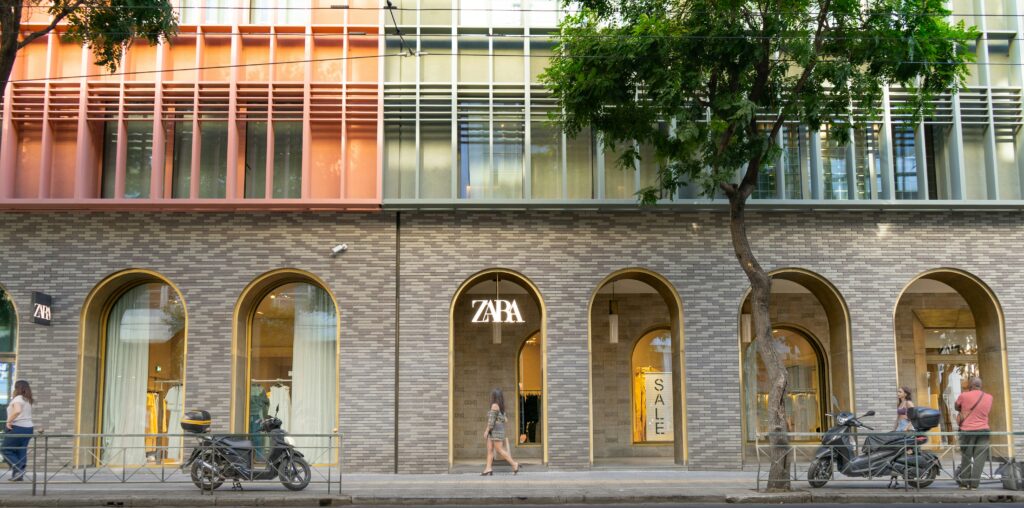
Zara is not a luxury brand. But it borrows a few tricks from luxury retail, which is why the confusion comes up.
Here’s the difference:
- Luxury brands focus on craftsmanship, exclusivity, high prices, and long product lifespans.
- Zara focuses on affordability, speed, and constant new arrivals, all core fast fashion traits.
What Zara does borrow from luxury retail is store presentation. Zara stores sit in prime, high-traffic retail locations, often next to real luxury brands. The product displays are minimal and clean, not cluttered like typical mall fast fashion stores. Zara also avoids heavy discount culture; it rarely runs the deep clearance sales you see at other fast fashion chains.
This polished presentation makes Zara feel more premium than it actually is. But the underlying business model, speed, volume, and low relative prices, is fast fashion through and through.
How Zara Compares to Other Big Fashion Brands
Zara vs H&M
Both brands compete on price and trend-driven style. The main difference is speed. Zara’s design-to-shelf cycle is faster than H&M’s, and Zara replenishes inventory more often. H&M has leaned harder into sustainability branding and designer collaborations to stand out.
Zara vs Uniqlo
Uniqlo takes a different approach entirely. Instead of chasing trends, Uniqlo focuses on long-lasting basics made with technical fabrics. If you want ever-changing, trend-forward pieces, Zara is the pick. If you want durable, simple staples you’ll wear for years, Uniqlo fits better.
Zara vs Shein
Shein pushes the fast fashion model even further than Zara. Some Shein styles go from design to sale in a matter of days, and prices sit well below Zara’s. Zara offers noticeably better quality control and a more consistent in-store experience, which is part of why it can charge more.
Is Zara Trying to Be More Sustainable?
Zara has made some real moves here, even though the core business model still relies on high-volume production.
A few examples worth knowing:
- Join Life collection – uses materials like organic cotton and Tencel instead of standard synthetic fabrics.
- Garment recycling program – in-store bins let customers drop off old clothing.
- Pre-Owned resale platform – expanded to the US in late 2024, letting customers resell or repair Zara items instead of tossing them.
- Public sustainability targets – Inditex has set goals around cutting hazardous chemicals and reaching carbon neutrality.
That said, sustainability researchers point out these efforts don’t offset the sheer volume Zara produces every year. A recycling bin in a store doesn’t undo the environmental cost of manufacturing hundreds of millions of garments annually. If you care about sustainability specifically, treat these programs as a small plus, not proof that Zara has solved the problem.
Our Take: Should You Shop at Zara?
Zara is fast fashion, full stop. That’s not necessarily a bad thing if you know what you’re getting: trend-forward pieces at a fair price, with faster turnover than almost any other retailer.
If sustainability and long-term wear matter most to you, look at Zara’s Join Life line specifically, or consider brands built entirely around durability instead of trend cycles.
If you just want the current look without paying luxury prices, Zara does that better than almost anyone in the industry, and its speed is exactly why.
FAQ
Is Zara considered a fast fashion or luxury brand? Zara is a fast fashion brand, not a luxury brand. It borrows some presentation tricks from luxury retail, like prime store locations and minimal displays, but its pricing, speed, and production volume all match the fast fashion model.
How fast does Zara design and release new clothes? Zara typically takes two to three weeks to go from design to store shelf. This is much faster than the traditional fashion industry average of six to nine months.
Is Zara more ethical than Shein or H&M? Zara generally offers better quality control and a more consistent shopping experience than Shein, and it produces relatively closer to home compared to fully outsourced models. Still, it shares core fast fashion issues around overproduction with both H&M and Shein.
Does Zara have a sustainable clothing line? Yes. Zara’s Join Life collection uses organic cotton and Tencel, and the brand also runs a garment recycling program and a Pre-Owned resale platform in select markets, including the US.