
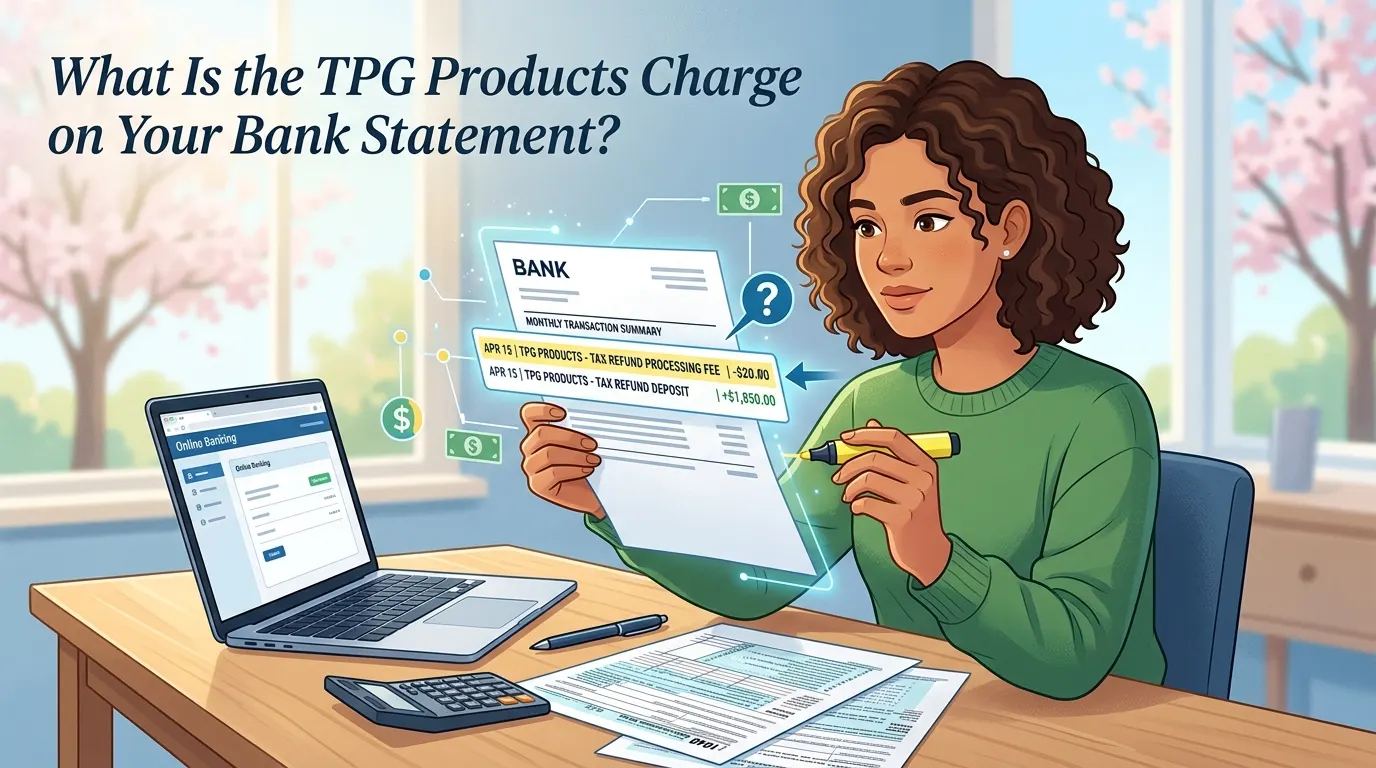

Ever seen a TPG Products charge on bank statement records or a deposit in your bank account with the name TPG Products . If you do, then you’re not the only one. During tax season, many people are worried about unfamiliar banking transactions. The name might be confusing at first glance, causing some to think that the transaction is inauthentic or fraudulent.
A transaction, in most cases, is entirely valid and related to tax refund processing and is connected to TPG Products. However, understanding why the transaction appears and what it means can help eliminate confusion and ensure you know exactly where your money is coming from.
In this article, you’ll learn what TPG Products is, why the transaction may show up on your bank statement, how the tax refund process works, and what you can do if you see a TPG Products charge on a bank statement record that you don’t recognize.
Understanding TPG Products
TPG Products is associated with Santa Barbara Tax Products Group (SBTPG), a financial services firm that serves tax preparers and taxpayers. The company specializes in processing tax refunds and financial transactions in connection with the tax refunds.
As taxpayers select various payment options as part of the tax filing process, they may be directed to the Tax Products Group first, and then deposited into their bank account. Oftentimes, this happens because the tax preparation firm takes fees from the federal or state tax refund.
Because of this, the transaction description in your account may be based on the company’s name behind the transaction paying the refund, instead of the Internal Revenue Service (IRS) or your tax preparation company. Many people are not used to this format, and this can be confusing when they see a transaction listed under a company name they do not know. TPG Products is a tax refund processing entry and is similar to other financial processing systems such as the FDMS charge on bank statement, which also handles merchant transaction routing.
Why a TPG Products Charge Is Showing Up on Bank Statement
A few things can cause a transaction to show up in your account that is related to your tax refund.
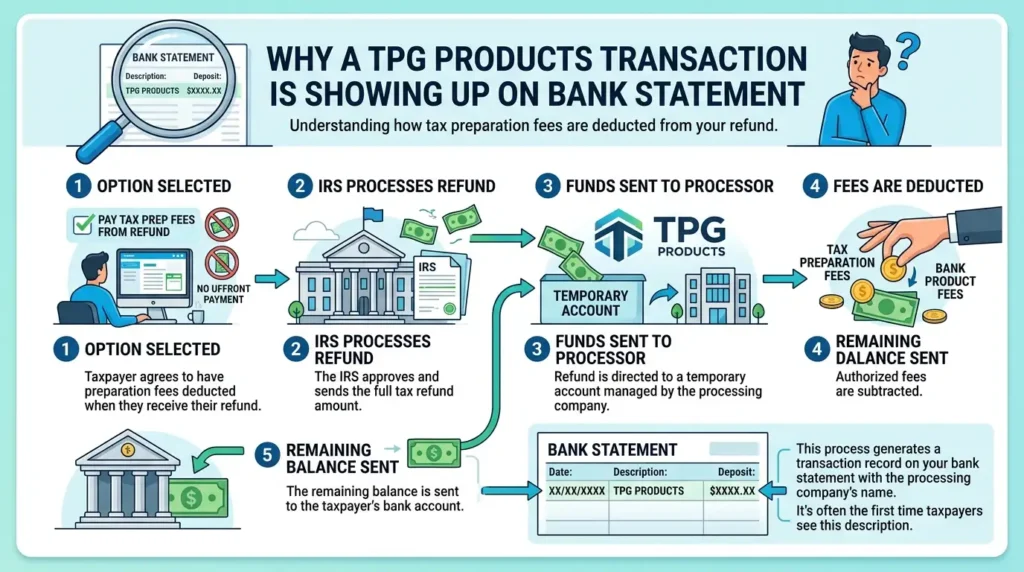
The most typical problem is when someone gets a tax preparation service and wants the preparation fees taken out of their expected refund. The taxpayer does not pay the fees when they file the application, but they agree to have the fee deducted when they receive their refund.
The general process works as follows:
• The IRS approves and sends the tax refund.
• The refund is directed to a temporary account managed by the processing company.
• Authorized fees are deducted.
• The remaining balance is sent to the taxpayer’s bank account.
This process generates a transaction record that can include the names of the tax refund processing companies.
This is the first time many taxpayers see such a description on a transaction when they are looking at it, and they may have a question as to what this is for.
How Tax Refund Processing Works
To understand why these transactions occur, it helps to know how tax refund processing operates behind the scenes.
Many tax preparation firms have the option of holding off on having to pay for tax preparation services until they receive their tax refund. This is a viable choice since taxpayers do not need to pay fees in advance to file returns.
If you check this, the tax prep company will work with a financial services company. The refund process goes through the processor, which subtracts any approved fees before sending the balance of the refund to the taxpayer.
Sometimes, the processor name will be printed on the transaction trail on bank statements. This can be helpful to taxpayers, but confusing if they aren’t aware of how it works.
Is the TPG Products Charge on Bank Statement legitimate?
In most cases, yes.
If there is a transaction relating to the processing of tax refunds, it is generally a safe bet if:
• You recently filed a tax return.
• You used a professional tax preparation service.
• You agreed to have preparation fees deducted from your refund.
• You are expecting a federal or state refund.
In such cases, the transaction is probably part of the normal refund processing.
If not taxed recently and not familiar with the transaction, however, it is important to investigate further.
Financial crime can come in a variety of shapes, and any transaction you don’t know should be looked into.
When Should You Be Concerned About TPG Products Charge on Bank Statement?
While a majority of the transactions for refunds are legitimate, there are cases that require further investigation.
If you think the transaction should be looked at more carefully, you should:
• You did not file a tax return.
• The transaction amount does not match your expected refund.
• You notice multiple unexpected withdrawals.
• You recently experienced identity theft concerns.
• The deal is at an unusual time of year.
· If you find any of these to be true, call your bank and tax preparer ASAP.
Looking through tax records can also help confirm if the amount is the same as what you expected as a tax refund.
What to Do If You Don’t Recognize the TPG Products Charge on Bank Statement
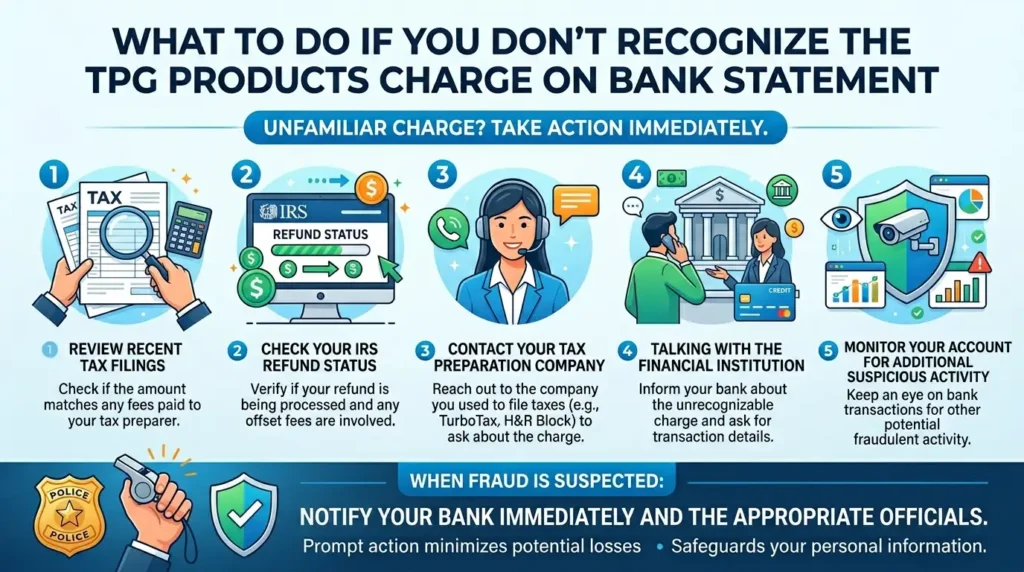
If you notice an unfamiliar TPG Products charge on bank statement activity and can’t connect it to a recent tax filing, take action immediately.
Start by:
• Reviewing recent tax filings.
• Checking your IRS refund status.
• Contact your tax preparation company.
• Talking with the financial institution.
• Monitoring your account for additional suspicious activity.
When fraud is suspected, notify your bank immediately and the appropriate officials. Prompt action minimizes potential losses and safeguards your personal information.
Tips for Avoiding Future Confusion
Some taxpayers can prevent confusion by knowing the options for processing their refunds before they file their taxes.
Helpful practices include:
• Carefully read all refund transfer disclosures.
• Keeping copies of tax preparation agreements.
• Store refund estimates as well as fee summaries.
• Following bank accounts for tax season.
• Asking tax preparers to explain processing methods.
Making some preparations can make it much easier to understand these transactions in the future if they involve refunds. You may also notice similar electronic transfer entries like the GPC EFT meaning on bank statement, which are commonly linked with digital fund transfer systems used by banks and processors.
Conclusion
When you see TPG Products charge on a bank statement, you might not know how it got there or what it is associated with if you don’t know what tax refund processing services are. Usually, the transaction is connected to a valid tax refund transfer deal, in which some of the preparation charges are taken out before the remaining tax refund goes into your account.
FAQs
1. What is a TPG Products charge on a bank statement?
A TPG Products charge on a bank statement is typically related to tax refund processing. It often appears when tax preparation fees are deducted from a refund before the remaining balance is deposited into your account.
2. Why did I receive a deposit from TPG Products?
You may receive a deposit from TPG Products if you recently filed a tax return and selected an option to have tax preparation fees deducted from your refund instead of paying them upfront.
3. Is a TPG Products transaction legitimate?
In most cases, yes. The transaction is usually connected to a valid tax refund transfer. However, if you did not file a tax return or do not recognize the amount, you should investigate further.
4. How can I verify a TPG Products charge on my bank statement?
You can verify the charge by reviewing your tax filing records, checking your refund status, contacting your tax preparer, or speaking with your bank for additional transaction details.
5. What should I do if I don’t recognize a TPG Products charge?
If you cannot connect the charge to a recent tax return, contact your bank immediately, review your tax records, monitor your account for suspicious activity, and report any potential fraud.