


Artificial intelligence is becoming a useful part of everyday life. From writing emails and organizing schedules to learning new skills and planning trips, AI apps can help people complete daily tasks faster and with less effort. You do not need to be a technology expert to use them. Many AI-powered applications are designed for simple, everyday activities.
The best part is that artificial intelligence apps can be used on smartphones, tablets, and computers. Whether you are a student, professional, parent, business owner, or simply someone who wants to save time, there are useful AI apps that can make everyday tasks easier.
In this guide, we will explore how AI apps can help with productivity, communication, learning, shopping, travel, creativity, and other parts of daily life.
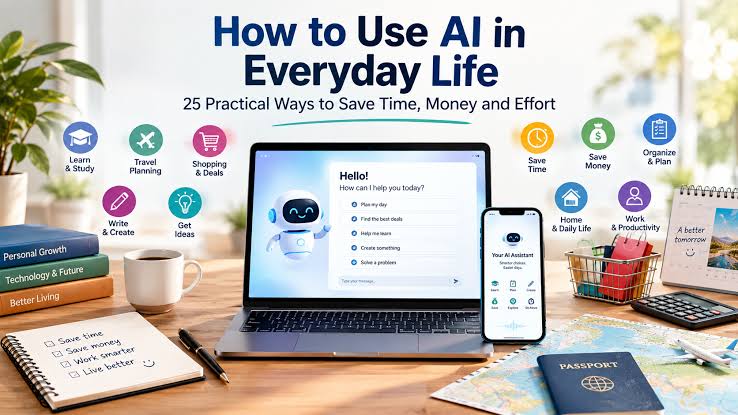
What Are AI Apps?
AI apps are applications that use artificial intelligence to perform tasks that normally require some level of human intelligence. They can understand text, recognize images, analyze information, generate content, make suggestions, and sometimes automate repetitive tasks.
Unlike traditional apps that mainly follow fixed instructions, modern AI applications can often respond to natural language. You can type or speak what you need, and the app can provide a useful response.
For example, an AI app can help you:
- Write or improve an email
- Summarize a long document
- Create a shopping list
- Translate text
- Plan a trip
- Generate ideas
- Explain difficult topics
- Organize information
- Create images or other content
- Improve your productivity
How AI Apps Can Help in Daily Life
AI can be useful in many areas of everyday life. The following table shows some common uses.
| Daily Task | How AI Can Help |
|---|---|
| Writing | Draft emails, messages, and documents |
| Learning | Explain concepts and create study materials |
| Planning | Create schedules, checklists, and plans |
| Travel | Suggest itineraries and activities |
| Communication | Translate and improve messages |
| Shopping | Compare products and create lists |
| Cooking | Suggest recipes based on ingredients |
| Creativity | Generate ideas, images, and content |
| Work | Summarize information and automate repetitive tasks |
| Organization | Sort information and create reminders |
Best Ways to Use AI Apps Every Day
1. AI Apps for Writing and Communication
Writing is one of the most common uses of artificial intelligence. AI writing applications can help you create emails, social media posts, notes, reports, and other types of content.
For example, if you have an idea but do not know how to explain it clearly, you can give the AI a short description and ask it to organize your thoughts.
AI can also help make your writing:
- Clearer
- Shorter
- More professional
- More friendly
- Easier to understand
However, you should always review important messages before sending them because AI-generated text may contain mistakes or misunderstand your intended meaning.
2. AI Apps for Productivity
Modern life often involves many tasks at the same time. Productivity-focused AI apps can help reduce this workload.
You can use AI to create a daily schedule, turn notes into a checklist, summarize meetings, organize ideas, or break a large project into smaller tasks.
For example, instead of spending several minutes creating a task list, you can tell an AI app:
“Create a simple plan for completing these five tasks today.”
The app can organize the tasks into a practical order.
3. AI Apps for Learning
Students and lifelong learners can benefit greatly from AI-powered educational tools.
AI can explain difficult subjects using simple language, generate practice questions, summarize study material, and help users understand concepts step by step.
For example, a student studying science can ask an AI app to explain a complex topic as if they were a beginner.
Useful Learning Tasks
AI can help with:
- Vocabulary
- Grammar
- Mathematics explanations
- Research brainstorming
- Study plans
- Quiz questions
- Summaries
- Language practice
AI should be treated as a learning assistant rather than a replacement for teachers, textbooks, or reliable academic sources.
4. AI Apps for Travel Planning
Planning a trip can involve researching destinations, creating schedules, comparing activities, and organizing packing lists.
AI apps can make this process easier by helping you create personalized travel plans.
You can provide information such as your destination, trip duration, interests, and budget. An AI tool can then suggest a basic itinerary.
For example, you might ask:
“Create a five-day family trip plan with sightseeing, outdoor activities, and relaxing evenings.”
AI can help turn a general idea into an organized plan.
However, always verify important details such as opening hours, transportation schedules, prices, weather, and travel requirements before making final arrangements.
5. AI Apps for Cooking and Meal Planning
AI can also be useful in the kitchen. If you have several ingredients but do not know what to prepare, you can ask an AI app for recipe ideas.
For example, you might have:
- Chicken
- Rice
- Tomatoes
- Onions
- Basic spices
An AI tool can suggest different meals based on those ingredients.
You can also ask for:
- Weekly meal plans
- Quick dinner ideas
- Vegetarian recipes
- Lunchbox ideas
- Ingredient substitutions
- Shopping lists
Always consider allergies, dietary requirements, and food-safety information separately rather than relying entirely on an AI-generated recommendation.
6. AI Apps for Personal Organization
Keeping track of appointments, tasks, ideas, and important information can become difficult.
Some useful AI apps can help organize information and make it easier to find later. AI-powered note-taking tools can summarize notes, identify important points, and organize information.
For busy people, this can save considerable time.
Instead of reading an entire page of notes, you may be able to ask an AI tool for the key points and action items.
7. AI Apps for Language Translation
Language barriers can make communication and travel more difficult. AI-powered translation applications can help users understand and translate text between different languages.
They can be useful when:
- Traveling internationally
- Reading foreign-language content
- Communicating with someone who speaks another language
- Learning a new language
- Understanding menus or signs
For important legal, medical, or official documents, professional translation may still be more appropriate.
8. AI Apps for Creativity
AI has also become popular among people who create digital content.
Creative AI applications can help generate ideas for:
- Blog posts
- Social media content
- Images
- Presentations
- Video concepts
- Stories
- Marketing campaigns
- Designs
For example, a content creator can use AI to brainstorm ten possible topics before choosing the best one.
The strongest results usually come from combining AI-generated ideas with human creativity, editing, and personal experience.
Popular Categories of Artificial Intelligence Apps
There are many types of artificial intelligence apps, and each category serves a different purpose.
| AI App Category | Common Uses |
|---|---|
| AI Assistants | Questions, planning, writing, brainstorming |
| AI Writing Tools | Articles, emails, editing, rewriting |
| AI Learning Tools | Explanations, quizzes, study help |
| AI Image Tools | Image creation and editing |
| AI Translation Tools | Language translation |
| AI Productivity Tools | Notes, tasks, summaries |
| AI Travel Tools | Itineraries and trip planning |
| AI Creative Tools | Ideas, content, and design |
| AI Meeting Tools | Transcription and summaries |
Benefits of Using AI Apps
The growing popularity of AI apps is mainly connected to convenience and time savings.
Save Time
AI can complete or assist with repetitive tasks quickly.
Improve Productivity
Instead of spending time organizing information manually, you can use AI to create summaries, lists, and plans.
Get Ideas Faster
AI can provide starting points when you are experiencing writer’s block or do not know where to begin.
Learn More Easily
AI can explain complex information in simpler language and provide examples.
Personalize Tasks
Many AI tools can adapt their responses based on the information and instructions you provide.
Things to Consider Before Using AI Apps
Although AI is useful, it is not perfect. Users should understand its limitations.
AI Can Make Mistakes
AI-generated information may sometimes be incorrect, incomplete, or outdated. Important information should be verified using reliable sources.
Protect Your Privacy
Avoid entering passwords, financial information, private documents, or other sensitive information into an AI application unless you understand how that service handles your data.
Review AI-Generated Content
Do not automatically trust everything an AI app produces. Read and check important content before using it.
Check App Permissions
When installing an AI application, review the permissions it requests. Only provide access that is necessary for the features you want to use.
How to Choose Useful AI Apps
With so many options available, choosing the right application can be difficult. Start by identifying the problem you want to solve.
Ask yourself:
- What task do I want to make easier?
- How often will I use the app?
- Does it work on my device?
- Is there a free version?
- What information does it collect?
- Does it offer the features I actually need?
You do not need dozens of AI applications. A few reliable tools that solve your everyday problems can be more useful than having many apps installed.
Tips for Getting Better Results From AI Apps
The quality of an AI response often depends on how clearly you explain what you want.
Instead of saying:
“Make a plan.”
Try:
“Create a simple one-week study plan for a beginner, with one hour of study each evening.”
A more specific request gives the AI more useful context.
You can also ask the application to:
- Use simple language
- Give step-by-step instructions
- Make a table
- Summarize the answer
- Provide examples
- Keep the response short
- Explain the topic for a beginner
Are AI Apps Worth Using?
For many people, AI applications can be extremely useful. They can reduce repetitive work, provide quick ideas, support learning, and make everyday planning easier.
However, the goal should not be to let AI make every decision for you. The best approach is to use AI as a helpful assistant while keeping human judgment in control.
Whether you need help writing an email, planning a trip, learning something new, or organizing your day, the right AI tool can save time and make the process easier.
Frequently Asked Questions About AI Apps
What are AI apps?
AI apps are applications that use artificial intelligence to perform tasks such as generating text, analyzing information, answering questions, translating languages, creating content, and helping users organize their work.
What are the most useful AI apps for daily life?
The most useful options depend on your needs. AI assistants, writing tools, productivity apps, translation tools, learning applications, and creative AI tools can all be useful for everyday tasks.
Can AI apps save time?
Yes. AI can help automate or speed up repetitive tasks such as summarizing information, drafting messages, creating lists, organizing notes, and generating ideas.
Are AI apps free?
Some AI apps offer free versions, while others require subscriptions for advanced features. Pricing and available features vary between applications.
Are artificial intelligence apps safe?
AI apps can be safe when used responsibly, but users should review privacy policies, permissions, and data practices. Avoid sharing sensitive personal information unless you understand how it will be handled.
Can students use AI apps?
Yes. Students can use AI applications for explanations, brainstorming, study planning, practice questions, and summarizing material. However, they should follow their school’s or institution’s rules regarding AI use.
Can AI apps replace humans?
AI can assist with many tasks, but it does not replace human judgment, creativity, experience, or responsibility. For important decisions, human review remains essential.
Conclusion
AI apps are becoming practical tools for everyday life. From writing and learning to travel planning, cooking, organization, translation, and creativity, artificial intelligence can help people save time and complete tasks more efficiently.
The best way to use these tools is to choose applications that solve real problems in your daily routine. Start with one or two useful tools, learn how to give clear instructions, and always review important information before relying on it.
As artificial intelligence continues to develop, useful AI apps will likely become an even bigger part of how people work, learn, communicate, and manage everyday tasks.