


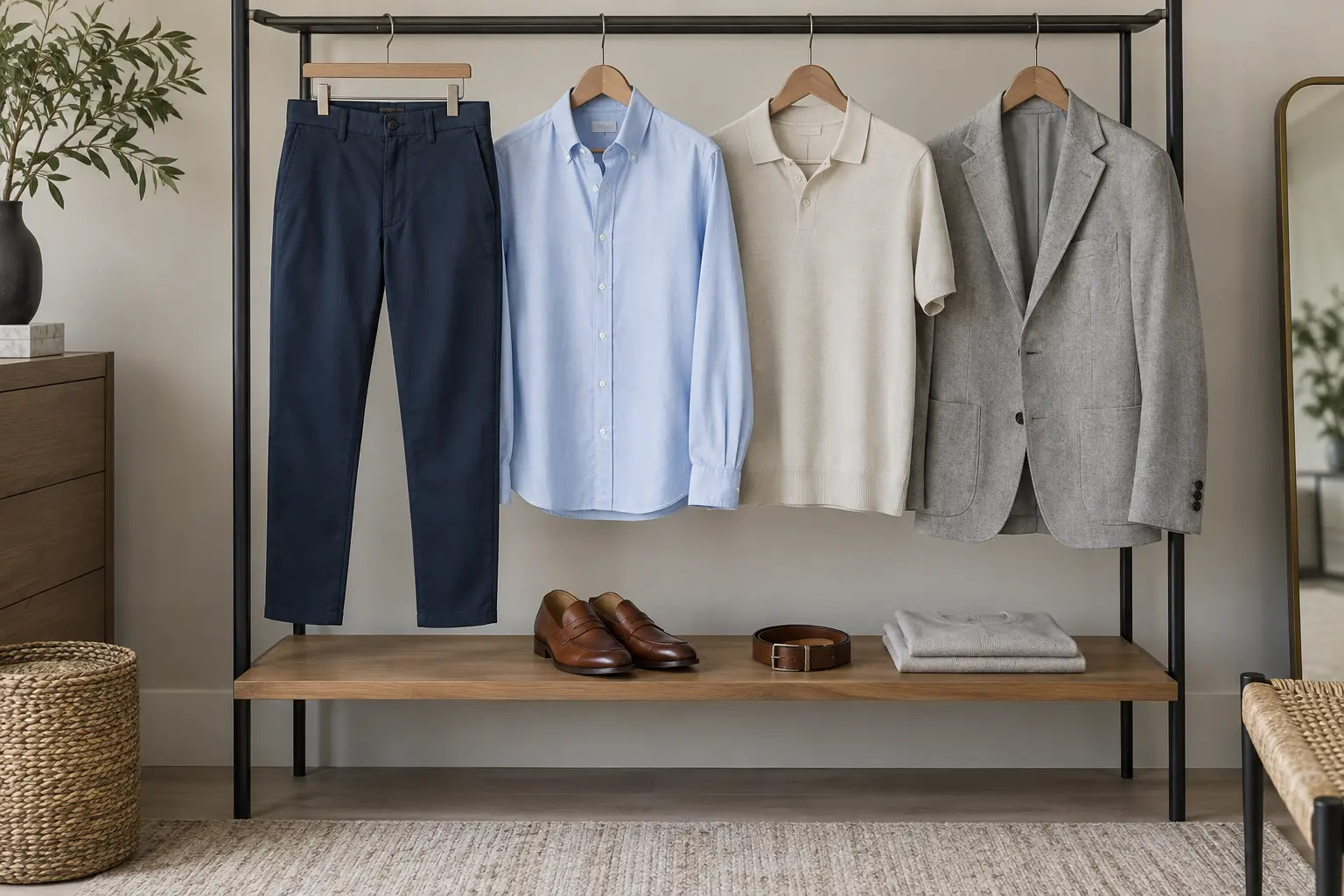
Business casual for men means a polished, professional look that is dressier than everyday casual but more relaxed than a suit and tie. It typically includes dress trousers or chinos, a button-down shirt or a polo, a fine-knit sweater, an optional blazer, and clean leather shoes or loafers. The goal is to look neat and put together for a professional setting without full formal wear. Business casual for men avoids jeans in most offices, along with t-shirts, sneakers, and anything too casual.
Business casual confuses many men because the rules vary by workplace. Here is a clear guide to what business casual means for men, what to wear, and what to avoid.
Quick answer: What is considered business casual for men? It is a polished, professional outfit built from chinos or dress trousers, a collared shirt or polo, optional tailored layers, and clean leather shoes.
What Is Considered Business Casual for Men?
Business casual sits between formal business wear and everyday casual. It means looking professional and put together, but more relaxed than a full suit.
The idea is to appear neat, competent, and appropriate for a professional setting, while being more comfortable than corporate formal wear. You skip the tie and often the suit, but you keep a polished, dressed-up look.
Because the term is loose, the exact rules shift from office to office. A traditional company’s business casual is dressier than a startup’s. When you start a new job, observe what colleagues wear or ask, since the safe version varies.
Business Casual Staples for Men
These are the reliable core pieces of a men’s business casual wardrobe. They work in almost any business casual setting.
- Bottoms: Dress trousers, chinos in neutral colors, tailored pants
- Tops: Button-down shirts, polos, fine-knit sweaters
- Layers: A blazer or sport coat, a cardigan, a sweater vest
- Shoes: Leather shoes, loafers, derbies, clean minimal boots
- Accessories: A leather belt matched to your shoes, a watch
Build most of your business casual outfits from these staples. A button-down with chinos and loafers, or a fine-knit sweater with dress trousers, is business casual done right.
What to Wear for Business Casual: Men
Here is how to put together a business casual outfit for men, from the most polished to the more relaxed end.
| Level | Business Casual Outfit |
|---|---|
| Dressier | Dress trousers, button-down, blazer, leather shoes |
| Standard | Chinos, button-down, loafers |
| Relaxed | Chinos, polo or fine knit, clean leather shoes |
| Cool weather | Trousers, collared shirt under a sweater, boots |
A reliable business casual outfit is chinos with a button-down and loafers. Add a blazer to dress it up, or swap in a polo for a more relaxed look. A sweater over a collared shirt works well for cooler days.
What Is Not Business Casual
To make the line clear, here is what generally falls outside business casual for men. Avoiding these keeps you appropriate.
- Jeans (in most traditional offices), especially light or ripped ones
- T-shirts, tank tops, and graphic tees
- Hoodies and sweatshirts
- Sneakers (in most offices), sandals, and flip-flops
- Shorts and athletic wear
- Anything wrinkled, stained, or overly casual
The simple test: if it looks like something you would wear to the gym, the beach, or a very casual weekend, it is probably not business casual. Some relaxed offices allow dark, clean jeans and clean minimal sneakers, but when unsure, choose chinos and leather shoes.
Business Casual Colors and Fit
Beyond the pieces, colors and fit make a business casual look sharp for men.
For colors, lean on versatile, professional tones:
- Neutrals like navy, gray, tan, and white for a clean base
- Deeper colors like burgundy or forest green for a top or sweater
- One subtle pattern, like a check shirt, for interest
For fit, business casual relies on well-fitting clothes. Your shirt should skim the body, trousers and chinos should fit cleanly, and a blazer should sit right at the shoulders. Good fit is what makes business casual look polished rather than sloppy.
How to Build a Business Casual Outfit
Putting a business casual outfit together is simple once you know the staples. Use this approach.
- Start with a professional bottom: dress trousers or chinos
- Add a polished top: a button-down, polo, or fine-knit sweater
- Layer if needed: a blazer or cardigan
- Choose clean leather shoes: loafers, derbies, or minimal boots
- Add a matching belt and keep accessories simple
A button-down with chinos and loafers, or a sweater over a collared shirt with dress trousers, is reliable business casual. Once you have the staples, mixing and matching them covers most workdays.
Business Casual by Industry
Different industries interpret business casual differently. Knowing where your workplace sits helps you dress right.
- Traditional industries (finance, law, corporate): Business casual leans dressier here. Dress trousers, a button-down, and often a blazer. No jeans.
- Corporate offices: Standard business casual. Chinos or trousers with a button-down or polo, blazer optional.
- Tech and startups: More relaxed. Dark clean jeans and a button-down or polo may be acceptable, with clean minimal sneakers.
- Creative fields: Business casual with more personal style allowed. Still polished, but with room for individual touches.
The rule across industries is the same: dress to your workplace’s norm, and when unsure, lean slightly dressier. Observing what senior colleagues wear is the best guide to your office’s version of business casual. Starting a new job dressed a notch sharper is always safer than too casual.
Business Casual by Season
Business casual shifts a little with the weather, mainly in fabrics and layers. Adjusting keeps you comfortable and appropriate year-round.
Spring and summer: Lighter fabrics and colors. Short-sleeve button-downs, breathable polos, and lighter chinos or trousers. Loafers work well, and you can skip heavy layers. Keep a light blazer for cool offices.
Fall and winter: Warmer layers. Fine-knit sweaters, sweater vests, blazers, and heavier trousers. Layer a collared shirt under a sweater. Closed leather shoes and boots suit the season. A structured coat over your outfit keeps it polished outdoors.
Across seasons, the business casual staples stay the same. You simply adjust the fabric weight and layers to the temperature while keeping the polished, professional look. This makes business casual easy to maintain all year with a few seasonal swaps.
Common Business Casual Mistakes to Avoid
A few mistakes can make a business casual outfit look too casual or off. Avoid these to stay polished and professional.
- Wearing jeans in a traditional office. When unsure, choose chinos or dress trousers instead.
- Sneakers in a formal workplace. Stick to leather shoes or loafers unless your office is clearly relaxed.
- A poor fit. Baggy or too-tight clothes look sloppy. Well-fitting pieces are key to looking professional.
- Overly casual tops. Skip t-shirts, hoodies, and graphic tees. Choose button-downs, polos, or fine knits.
- Wrinkled or worn clothing. Keep everything clean and pressed for a polished look.
- Too many bold colors or patterns. Lean on neutrals with one subtle accent for a professional look.
Avoiding these keeps your business casual outfits appropriate and sharp. Most business casual mistakes come down to going too casual or ignoring fit, both of which are easy to fix. When in doubt, dress a notch dressier and choose well-fitting, neutral, well-kept pieces.
Business Casual Outfit Ideas to Copy
Here are complete business casual outfits for men, so you can put the guidance into practice quickly.
Standard office: Navy chinos, a light blue button-down, and brown leather loafers. Simple and reliable.
Dressier office: Gray dress trousers, a white button-down, a navy blazer, and leather shoes. Sharp and professional.
Relaxed office: Tan chinos, a fine-knit polo, and clean leather shoes. Polished but easy.
Cool weather: Charcoal trousers, a collared shirt under a crew-neck sweater, and leather boots. Warm and put together.
Each outfit follows the same formula: a professional bottom, a polished top, an optional layer, and clean leather shoes. Notice how the pieces repeat in different combinations, which is the benefit of building around business casual staples. Once you have these core pieces, mixing and matching them covers your whole work week with minimal effort.
FAQ
What is considered business casual for men?
Business casual for men means dress trousers or chinos, a button-down shirt or polo, a fine-knit sweater, an optional blazer, and clean leather shoes or loafers. It is dressier than everyday casual but more relaxed than a suit and tie, aiming for a polished, professional look.
Can men wear jeans for business casual?
In most traditional offices, jeans are not business casual. In relaxed or modern workplaces, dark, clean jeans without rips can be acceptable. When unsure, choose dress trousers or chinos, which are always safe for business casual.
What shoes are business casual for men?
Leather shoes, loafers, derbies, and clean minimal boots are business casual for men. Match your belt to your shoes. Sneakers are usually too casual for traditional offices, though some relaxed workplaces allow clean, minimal leather sneakers.
What is the difference between business casual and smart casual for men?
Business casual is workplace-focused and slightly more conservative, centered on trousers or chinos with a button-down. Smart casual is a bit more relaxed and style-driven, allowing more variety. Both avoid a full suit and both use polished, well-fitting pieces.
Conclusion and Next Step
Business casual for men means a polished, professional look with dress trousers or chinos, a button-down or polo, an optional blazer, and clean leather shoes. It is dressier than casual but more relaxed than a suit. Avoid jeans in most offices, along with t-shirts, sneakers, and anything too casual.
Your next step: check your closet against the business casual staples and note any gaps. If you are starting a new job, observe what colleagues wear in your first week to learn your office’s version. Building a few reliable outfits from the staples makes getting dressed for work easy.
Related reading: Learn how to wear a men’s blazer and build a men’s capsule wardrobe. For workplace career resources, visit Indeed.